This article was written for Greystone.Net by Jessica Levco, a freelance healthcare writer and event strategist. 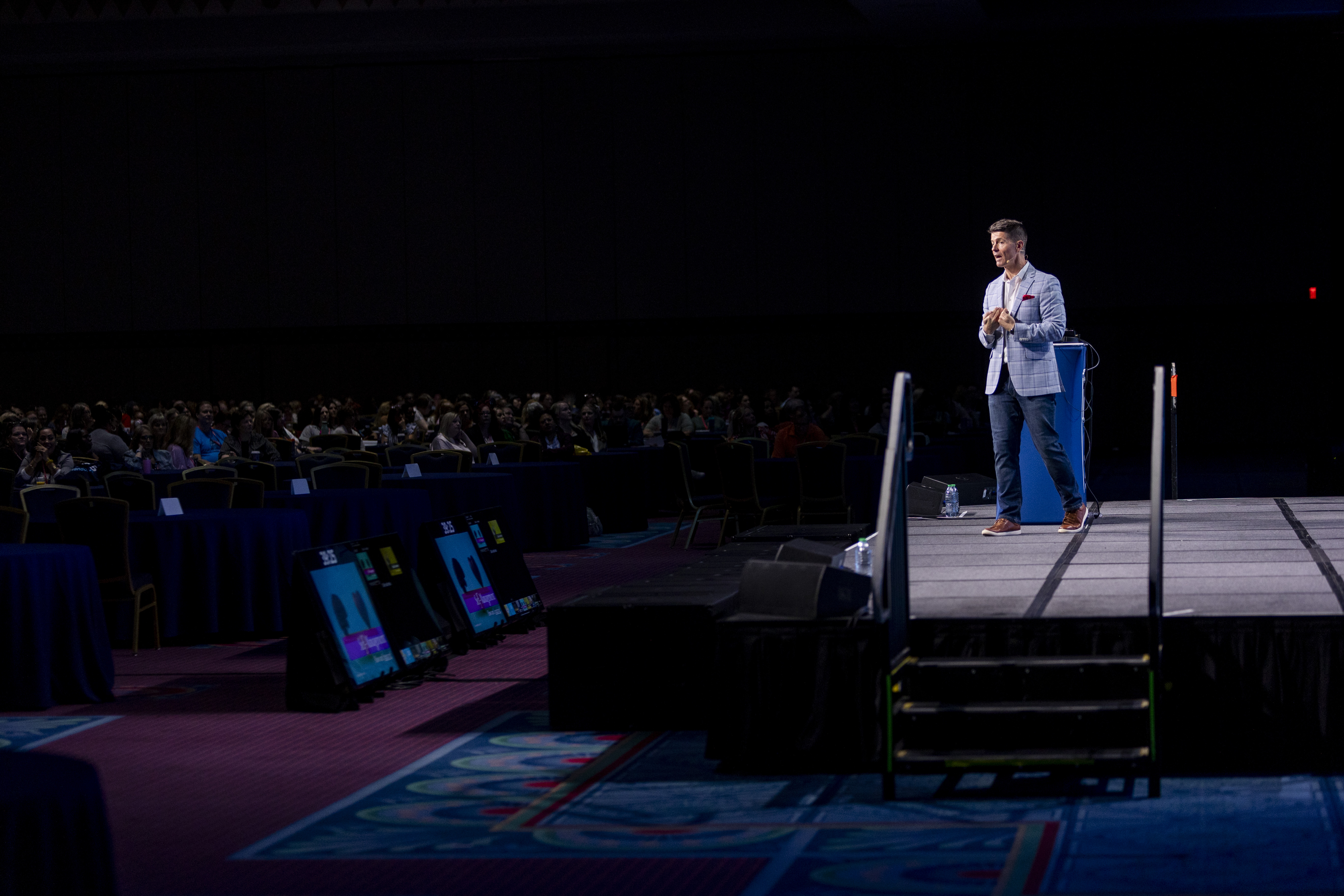
Can you read the room? Understand your what your colleagues need from you? Not lose your cool when your hospital is in the middle of (insert crisis of the week)?
According to a study by TalentSmartEQ, emotional intelligence plays the biggest role in career performance, compared to 33 other workplace skills. Emotional intelligence influences 58% of success across every type of career. That’s a pretty sizable percentage.
Of course, #HCIC26 (Oct. 25-28 in Orlando) is going to bring you all kinds of sessions on how to improve your marketing technical expertise and industry skills, but we also wanted to devote an entire keynote to teach you more about tapping into your emotional intelligence.
Rich Bracken, founder and executive coach at Unstoppable Solutions, will present, “EQ + Music: Soundtrack for Success” on Oct. 27. In two years, he’s delivered 30+ keynotes about this topic across three continents for Fortune 100 companies with a 98% satisfaction rate.
Bracken defines emotional intelligence in four parts: self-awareness, self-management, social awareness and relationship management. The first two are internal: understanding your emotions and deciding what to do with them. The second two are relational: reading others and improving the quality of your connections.
“You can be technically savvy and know all the right skills, but if you can’t communicate or regulate your emotions, you’re going to burn out or just not be as effective as you could be with your career,” Bracken says.
He also pushes back on the idea that emotional intelligence is a “soft skill.”
“I think emotional intelligence has been overlooked before AI came into the picture, but now it’s more critical than ever,” Bracken says. “As more interactions get routed through chatbots and automated systems, active listening, asking deeper questions and building genuine connections are something that all leaders should be focusing on right now.”
He says that 70% of an employee’s view of a company’s culture comes from their leaders. But emotional intelligence tends to drop as people move up the organizational ladder.
“As we move into management roles, our emotional intelligence drops because we’re more visible,” Bracken says. “We feel like we can’t make any mistakes because everyone is watching us. But it’s not about being perfect. It’s about asking yourself every morning: ‘What’s my favorite version of myself today, and how do I want to show up?’ If you’re not establishing the standard of who you are and how you want to show up, your performance, happiness and your ability every single day is thrown to the whims of others.”
Bracken isn’t going to just talk about emotional intelligence, he’ll also play some songs about it. He spent more than two decades as a national and international touring DJ. Throughout the session, he’ll weave music (check out his playlist) into his session. Music, he explains, creates an emotional response in about three seconds. That’s the same timeframe that expressing emotional intelligence can operate in.
Rich prides himself on blending education with empowerment, engagement with entertainment, and a rare level of empathy combining his personality with his own background in healthcare.
“For the hour that everyone’s with me, I just want everyone to come and have fun, let their guard down, take a deep breath and let their shoulders drop. Yes, they will be more educated on how to be more in control of their success and happiness, but I want them to feel like someone is taking care of them since they do so much for others.”
Register now for #HCIC26, Oct. 25-28 in Orlando. See you there!